

Latest News
Kentish Flats visit highlights evolving role of safety
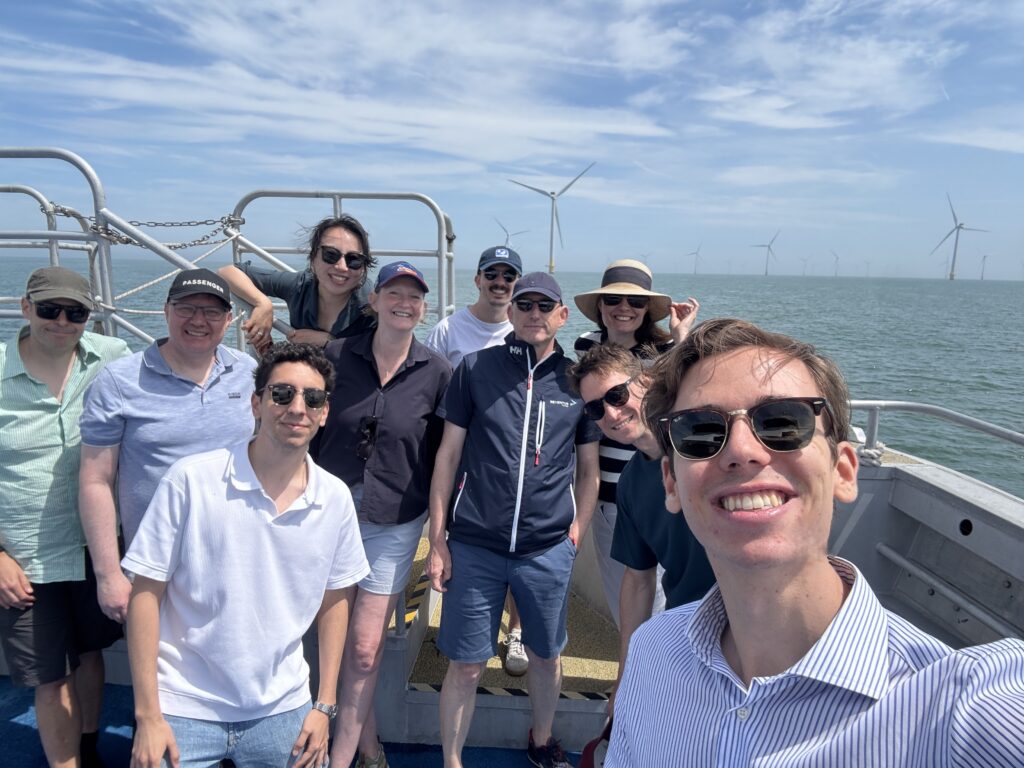
The Reventus Power team this week visited Kentish Flats offshore wind farm in the UK and reflected on how far the industry has come over the last two decades. Steve Cook, HSEQ Manager at Reventus Power, explains what this means for safety.
The Thames Estuary has played a crucial role in the development of offshore wind into what now is a global industry. For most of the 2010s, this area off England’s southeast coast was the site of the world’s largest offshore wind farm: the 630MW London Array that was commissioned almost 15 years ago.
It was also the location of pioneering projects that were delivered even before London Array and, this month, the Reventus Power team took a trip out to one of those projects.
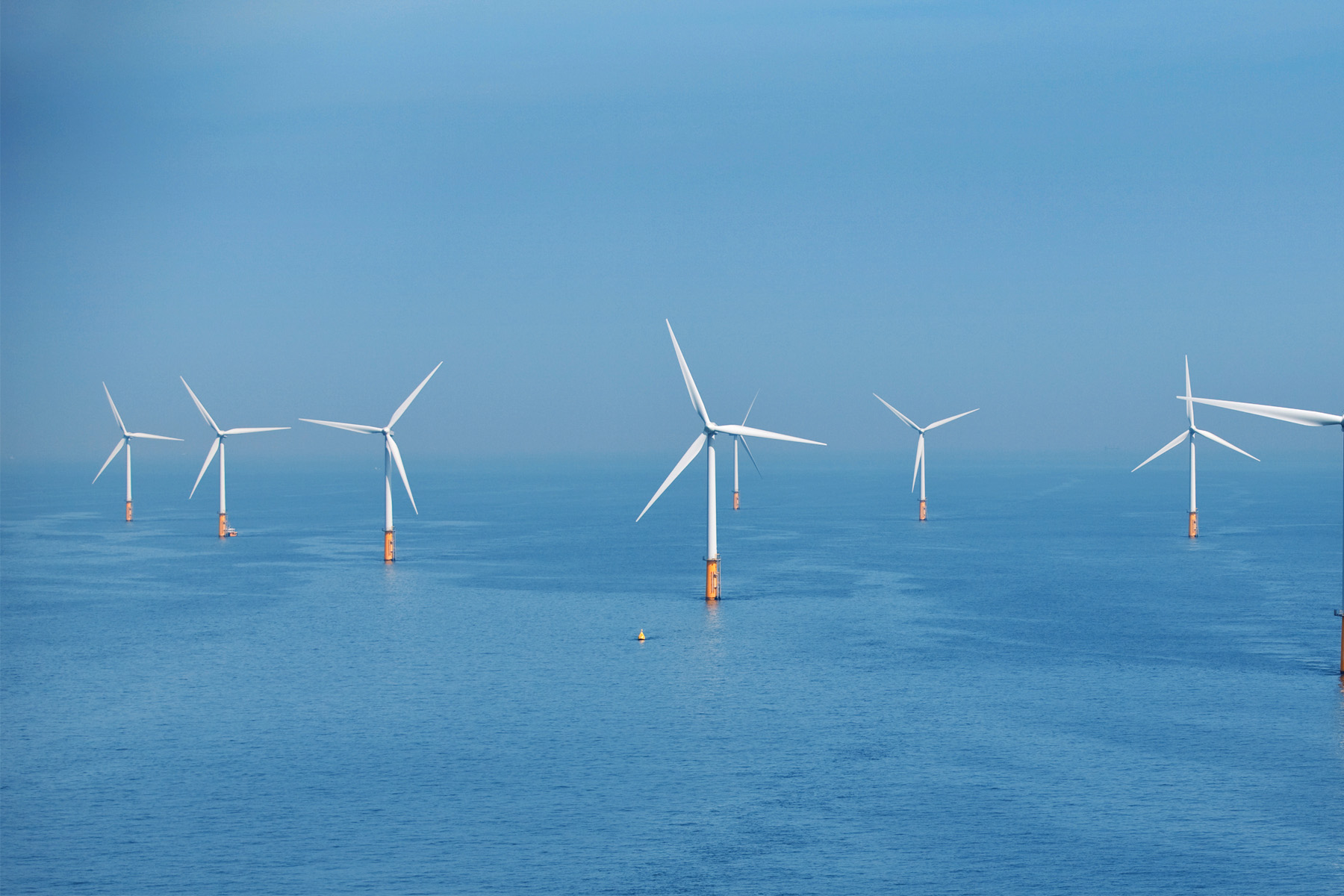
Yesterday, our team visited Vattenfall’s 90MW Kentish Flats project that was completed in 2005, more than two decades ago. With its 3MW turbines, a far cry from the up-to-15MW machines used in Europe today, Kentish Flats is a reminder of how far the offshore wind sector has come in the last two decades.
It clearly is a different world now. I worked on London Array but also on projects that completed at around the same time as Kentish Flats, such as the 60MW 30-turbine Scroby Sands commissioned in 2004 off the Norfolk coast. Offshore wind projects were new to all of us then, without today’s defined supply chain that we can understand and work with, nor the benefits of all the leanings since then in respect of project management, health and safety issues.
The latter is important to Reventus Power, as health, safety, environmental and quality (HSEQ) are a strong focus for us when evaluating an investment in an offshore wind project. This is because we don’t just seek to deliver projects. We want to ensure we deliver them safely.
Active involvement with accredited certification
Reventus Power is an investment platform dedicated to offshore wind. Since 2019, we’ve built a portfolio of offshore wind projects that currently covers the entire lifecycle, ranging from development and construction projects to operational projects. It is worth reiterating that we do not undertake project delivery nor project safety ourselves but rather rely on our project partners for this. Having said that, and seen the importance of HSEQ in our investment mandate, we do play an active role when it comes to safety.
In practice, this means getting involved in live projects in a variety of ways, such as:
- Attending advisory project committees and management committees to identify HSEQ issues at developments and embed best practice.
- Carrying out site visits at key project milestones to assess location-specific risks and assess the status of the project.
- Developing detailed HSEQ trackers that identify trends and enable us to use a data-led approach with our partners.
- Participating in project hazard identification and risk assessments for key project activities.
The Reventus Power commitment to embedding strong HSEQ throughout our operations is demonstrated by our accredited certification for occupational health and safety (ISO 45001), environmental management (ISO 14001) and quality management (ISO 9001). For those who follow me, you may recall that I set out our approach to HSEQ and the role of this accreditation in this blog in February 2026.
It is worth noting that these standards are changing in 2026 and now place a greater emphasis on climate change and environmental performance.
For example, an updated version of ISO 14001 (environmental management) is being rolled out this year and now requires organisations to explicitly evaluate climate change and other environmental conditions, including pollution, biodiversity and ecosystems. As a renewables business, we are already doing this.
Meanwhile, a new version of ISO 9001 (quality management) is due in September, with climate commitments similar to those in the new ISO 14001, and changes emphasising how corporate leaders should drive ethical behaviour, quality culture and risk-based decision-making.
Participation in new offshore talking points
Finally, to support our commitment to HSEQ and industry progress, Reventus Power is an active member of organisations including the offshore wind safety group G+ and the Energy Institute.
At G+, we are an active participant in its European stakeholder forum, enhancing our understanding of a wide range of recent issues such as how to manage the risk of vessels being hit by moving turbine blades, updated turbine safety rules and guidance on how companies in the supply chain can manage severe weather risks. Many of these risks have only recently been identified, again underscoring how much the sector has evolved and matured.
For the Reventus Power team, this principle was reinforced by our visit to Kentish Flats. Getting out on the water and close to the turbines shows us how risks offshore can shift as quickly as the weather, and is a powerful reminder why we embed HSEQ processes and approaches that can cope with that environment. Developers need investors that can understand technical and practical risks, not just financial risks.
It was great that we could see a project in action, and the newfound awareness of HSEQ issues that many took from the day will enable us to further embed these lessons in our organisation. The offshore wind industry has come a long way since Kentish Flats – but you can only learn some of those lessons when you see a project up close.